
Generators for various purposes
A generator is an electromechanical device that converts mechanical energy into electrical energy using the electromagnetic principle. It is used to supplement electrical power or as an independent source where the power grid is unavailable (e.g., remote areas, emergencies, etc.).
Why Generators?
Generators provide an uninterrupted power supply during emergency or planned outages, allowing companies to avoid production stoppages, data loss, and financial damage.
Showing all 2 results
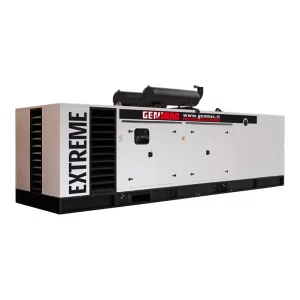
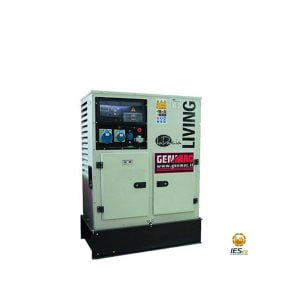
What is a diesel generator and when do you need one?
A diesel generator (generating set) is a unit combining a diesel engine and an alternator that produces electricity during a grid outage or far from the grid. In the regions of Georgia where voltage drops and outages are common, a standby generator is the only guarantee that a compressor, a cold store, a furnace or a medical facility keeps running.
IESCO offers GENMAC (Italy) generators from 5 to 2,500 kW — from home and small-business models to industrial and automatic standby stations — with installation, automatic transfer (ATS) and service.
Types of generators
- Home and small business (5–12 kW) — single- or three-phase, silenced canopy, automatic start on grid failure; house, country house, shop, office, small hotel.
- Commercial (15–100 kW) — restaurants, hotels, pharmacy chains, bank branches, telecom nodes, farms.
- Industrial (100–2,500 kW) — factories, hospitals, shopping centres, mining and construction sites, data centres; parallel operation of several sets.
- Mobile (trailer-mounted) — construction sites, events, temporary installations.
- Open or silenced — the open version for a separate engine room, the canopy (65–75 dB) for installation in a yard or next to a building.
How to select a generator
1. Power (kVA / kW) — add up the power of all consumers that must run at the same time and, for motor-driven machines (compressor, pump, lift), allow for the starting current — 2–3 times their rating. Add a 20–25% reserve for standby duty. Note: 1 kVA ≈ 0.8 kW.
2. Duty — standby: runs only during outages, up to 200 hours a year; prime: instead of the grid, with variable load; continuous: 24/7 at constant load. The same generator is rated at different power in each duty.
3. Automation (ATS) — the automatic transfer switch detects a grid failure within 3–10 seconds, starts the generator and transfers the load; when the grid returns it transfers back and cools the generator down. For hospitals and data centres — UPS plus generator together.
4. Fuel and autonomy — tank capacity for 8–24 hours at rated load; on industrial sites an external tank with automatic refilling.
5. Noise and location — silenced canopy, anti-vibration mounts, exhaust routing, ventilation in the engine room. More on motor starting currents — in our motor starting simulator; all tools — in the Engineer's Corner.
Why GENMAC?
GENMAC is an Italian manufacturer (Vicenza) that has been building generators since the 1980s with the world's leading engines — Perkins, Yanmar, Kohler, Deutz, Cummins, FPT — and Mecc Alte / Stamford alternators. European quality, ISO 8528, CE, a large service network and readily available parts. IESCO holds a GENMAC qualification certificate and is the brand's official partner in Georgia.
IESCO offers
- GENMAC home generators — 5–12 kW, silenced, with automatic start
- GENMAC diesel generators — 15–2,500 kW, open and canopied, with Perkins/Yanmar/Kohler/Deutz/Cummins engines
- ATS automatic transfer switches, parallel synchronisation, remote monitoring
- Installation, exhaust and fuel systems, control cabinets — with Siemens automation
- Scheduled service and genuine parts — oil, filters, batteries, controllers
🎯 Want to know what generator size you need? 📞 Call us: +995 32 206 01 00 or visit our showroom at 52 Avchala St., Tbilisi.
Frequently asked questions about generators
What generator size do I need for a house?
For an ordinary house (lighting, fridge, pump, boiler, TV) 5–8 kW is enough; with air conditioners, an electric oven and a lift — 10–12 kW. If there are three-phase consumers (pump, machine tool) a three-phase generator is chosen. IESCO's engineers will do the calculation free of charge.
What is the difference between kVA and kW?
kVA is the apparent power, kW the active power the consumer actually uses; for diesel generators the standard ratio is 0.8 — a 100 kVA generator delivers 80 kW. Always compare your load in kW.
How quickly does the generator start during an outage?
With an ATS — automatically, within 3–10 seconds (start-up plus voltage stabilisation). For consumers that cannot tolerate even a momentary outage (servers, medical equipment) the generator is installed together with a UPS.
How much fuel does a diesel generator use?
About 0.25–0.3 litres per kWh at full load: a 10 kW generator ≈ 2.5–3 l/h, a 100 kW unit ≈ 25–30 l/h. At half load consumption is proportionally lower. Prolonged running below 30% load is harmful to the engine.
How often does a generator need servicing?
A standby generator should be run under load for 15–30 minutes every month; oil and filters every 250–500 hours or once a year, the battery every 2–3 years. IESCO's service provides scheduled maintenance throughout Georgia.
Do you have generators in stock?
Home and commercial models of 5–50 kW are often in stock; industrial sets to order within 4–8 weeks from Italy. ☎ +995 32 206 01 00, showroom at 52 Avchala St., Tbilisi.
