
🛠 In the world of compressed air systems, regular servicing is like taking care of your health—timely intervention prevents serious problems and ensures continuous operation of the facility.
It doesn’t matter whether your business is small or large—smooth and uninterrupted operations require all equipment, including air compressors, to function properly without disrupting their lifecycle. The best way to ensure the reliability, efficiency, and long service life of your compressed air equipment is through regular professional maintenance. That is why preventive maintenance is no longer an option—it is a necessity.
In this blog, we will discuss the essential aspects of air compressor maintenance, the importance of professional servicing, and why service plans are a smart investment.
Advantages of regular air compressor servicing:
It prevents breakdowns in advance: You cannot avoid small issues, but you can definitely stop them from becoming more serious.
It improves energy efficiency: A well-maintained compressor consumes less energy.
It reduces costs: Regular maintenance of air compressors helps prevent the need for emergency repairs and reduces the likelihood of expensive downtime.
It increases durability: less wear, more working years. A consistent maintenance routine extends the lifecycle of air compressors and protects them from premature wear and damage.
It increases safety: it minimizes the risk of accidents and ensures a safe working environment for personnel.
Regular servicing and preventive diagnostics are especially important in industries such as pharmaceuticals and food production, where air quality is critical. In addition, regular maintenance also helps prevent the risk of water contamination, which can damage equipment or even spoil your product.
Step 1: Air compressor servicing starts with a daily inspection
Performing daily inspections is one of the key ways to keep your air compressor in good condition. Below is a simple checklist to help you keep track of daily maintenance:
Check the oil level
Check the pressure gauge
Check for signs of moisture buildup – if your compressor produces excessive condensation, there may be a malfunction in the automatic drain system.
Check for air leaks:
Check the compressed air receiver tank
Check the condition of the filters
Check hoses for wear/damage
These quick checks help you detect problems at an early stage, allowing you to take corrective action.
Service plans: a smart investment
A service plan means not only periodic technician visits, but also peace of mind. A plan typically includes:
- Regular diagnostics
- Replacement of consumable materials (oil, filters, etc.)
- Priority technical support
- 24/7 emergency response
A service plan can be tailored to the specific needs of your business—whether it is a small workshop or a large industrial enterprise. The right service plan gives you peace of mind that any issue will be quickly resolved by the IESCO team, minimizing any negative impact on your operations.
Additionally: although it is essential to follow the manufacturer’s recommended maintenance schedule, you should also consider the operating environment of the compressor and adjust the maintenance frequency accordingly. It is also important to note that some production facilities may use air compressors seasonally, meaning the equipment may remain switched off for certain periods during the year (the same applies to backup screw air compressors).
If a compressor has been out of operation for 6 months or more, before starting it, it is necessary to replace at least the oil filter, air filter, and oil. This is because the filters may become brittle over time and the oil can become viscous, which may cause engine damage during startup.
**Why is professional intervention necessary?**
Modern air compressors are complex systems; therefore, qualified engineers are required for proper diagnostics and servicing. Incorrect maintenance can lead to serious consequences. At the same time, if servicing is performed by an unqualified technician on a specific brand of compressor, it may also result in the voiding of the warranty.
- Improper servicing may void the warranty.
- Non-certified parts increase the risk of damage.
- Experienced technicians ensure that the equipment complies with safety standards.
IESCO offers 24/7 air compressor servicing for any brand. In addition, IESCO owns the largest warehouse in the Caucasus, where spare parts for any brand of air compressor can be purchased.
Main maintenance tasks
Oil change: Regularly check and replace the oil (not applicable to oil-free compressors). Due to the operating principle, the screws in a screw compressor are directly lubricated by oil during operation. Therefore, if the oil change is delayed, it may lead to damage of the screw elements.
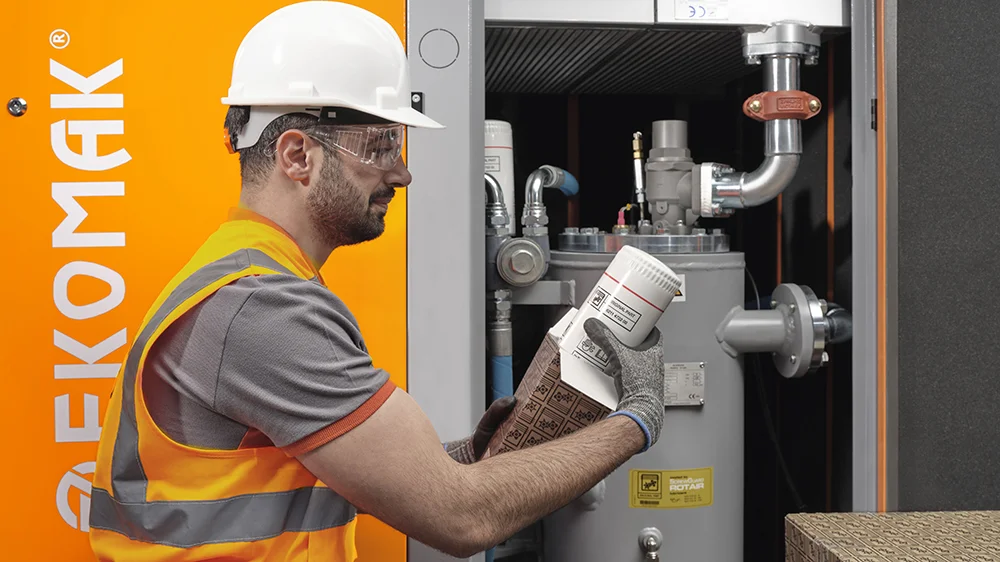
Regular cleaning and replacement of the air filter: Regular cleaning or replacement of air filters is essential to prevent blockages. Clean air is necessary both to avoid wear and to maintain efficiency. It helps protect the internal components of the compressor from dust, debris, and particles before they reach the core of the compressor.
Oil and filter replacement is required every 2,000–4,000 operating hours, depending on the air compressor manufacturer’s recommendations.
Cleaning: Keep the compressor block, tank, and hoses clean to ensure optimal airflow and to prevent clogging and corrosion.
Replacement of worn parts: Inspect and replace belts, separators, and other components that show signs of wear. Water and oil separators are essential for maintaining the cleanliness of compressed air. Water separators remove moisture from the air, preventing water buildup in the system, which can lead to corrosion and damage. Oil separators remove condensate generated during the compression process. This condensate can harm the environment if not properly treated before discharge.
Separator replacement is required every 4,000 operating hours, while belt replacement is needed every 8,000 operating hours (also depending on the air compressor manufacturer’s recommendations).
Lubrication and safety checks: Lubricate moving parts and inspect safety valves and their performance to ensure the compressor operates safely and smoothly.
Regular inspection and maintenance of these components will significantly extend the lifespan of your air compressor and improve its performance and energy efficiency.
Additionally: a specific component of the compressor may not be due for replacement according to the manufacturer’s instructions, however increased temperature, pressure fluctuations, and an unstable power supply may still cause damage to other parts of the system.
📞 If you would like more information about service plans or need diagnostics and preventive inspection for your compressor, contact us today at 032 206 01 00. Our team is available 24/7 and ready to assist you!