

When buying a motor for a pump, fan, compressor or machine tool, the first question is often not the power but the supply: a 220V or a 380V electric motor? This choice decides the motor’s efficiency, starting torque, size and how long it will last. Below — a comparison of both options, how to read the motor nameplate, and the case that helps many workshops: a three-phase motor on a 220V supply with a variable frequency drive.
1. Two supplies — two different motors
The Georgian grid has two standard voltages: 220V single-phase (phase + neutral — in every building) and 380V three-phase (three phases shifted by 120° — the standard for industrial sites). Both are 50 Hz.
- A single-phase motor (220V) cannot create a rotating field from one phase on its own — so it needs a capacitor (often two: start and run). The capacitor is the weakest point of the motor: it heats up and ages, and the typical failure “the motor hums but does not turn” is usually its fault.
- A three-phase motor (380V) gets its rotating field from the three phases themselves — the design is simple, there are fewer parts, the starting torque is high and the efficiency is better. That is why practically every industrial motor from 0.37 to 355 kW is three-phase.
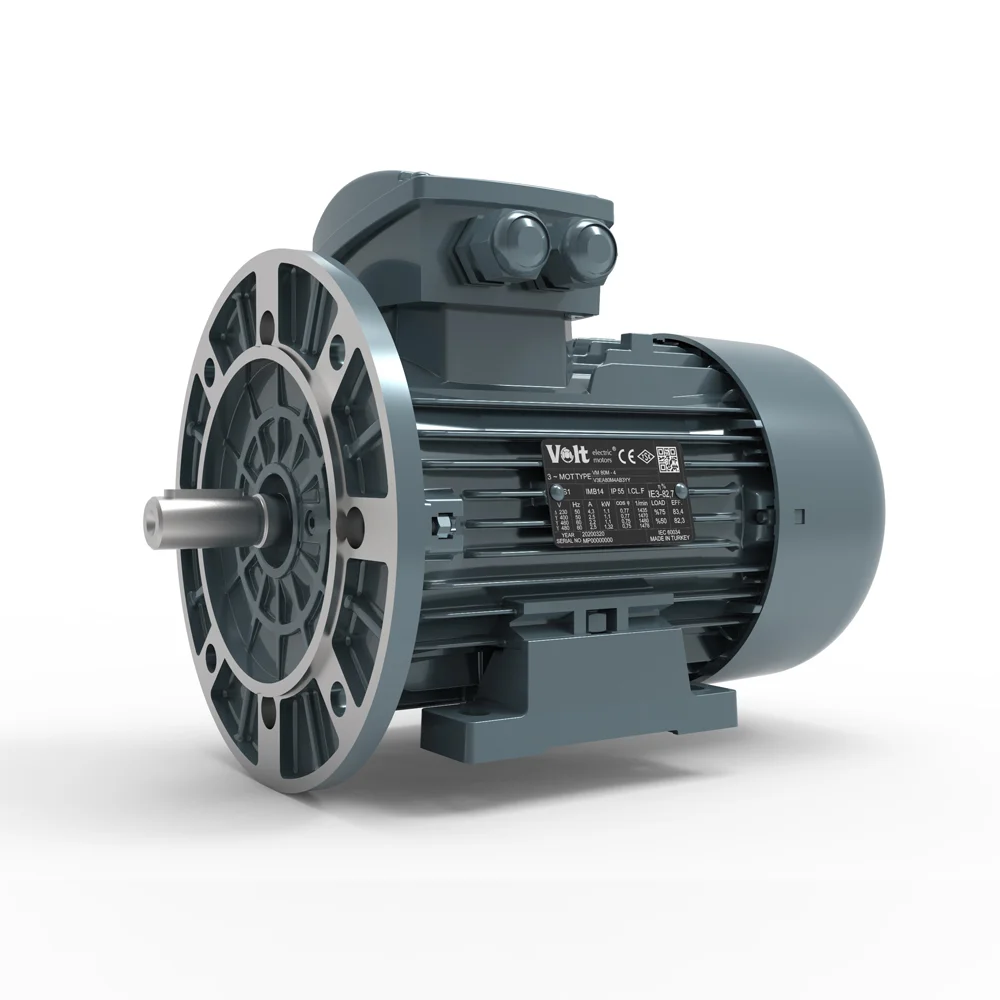
2. 220V or 380V electric motor — comparison in one table
| Criterion | 220V single-phase | 380V three-phase |
|---|---|---|
| Power range | typically 0.09–3 kW | 0.12–355 kW and above |
| Starting | with a capacitor, limited torque | on its own; starting torque 1.5–2.5 × rated |
| Efficiency | low, often no IE class | IE2 / IE3 / IE4 |
| Size and weight at the same power | larger | more compact |
| Reliability | the capacitor is a wear part | only the rotor and bearings move |
| Control with a VFD | practically impossible | standard |
| Where it makes sense | workshop, farm — where there is no three-phase supply | plant, pump, compressor, conveyor, machine tool |
Rule of thumb: if the site has 380V — always a three-phase motor. Single-phase is a forced choice where three phases are not available, and even then only up to about 3 kW.
3. How to read the motor nameplate: Δ/Y
A three-phase motor nameplate always shows two voltages and two symbols — Δ (delta) and Y (star). These are two connection schemes of the same motor, selected with links in the terminal box:

| Nameplate says | Connection on a 380V supply | 220V with a VFD |
|---|---|---|
| 230/400 V Δ/Y (220/380) | Y star | Possible — in Δ |
| 400/690 V Δ/Y (380/660) | Δ delta | No — the motor loses torque |
General rule: motors up to about 3 kW are 230/400 Δ/Y, from 4 kW — 400/690 Δ/Y. The most common mistake: connecting a 400/690 motor in Y on 380V — the motor turns, but with a third of its torque, stalls under load and overheats. So when choosing a motor, take a photo of the nameplate first.
4. Which one when — decision rules
- Do you have 380V? → a three-phase motor, at any power.
- Only 220V and the motor is ≤ 3 kW? → a single-phase motor with a capacitor (simple, cheap, wears out) or — up to 2.2 kW — a three-phase motor + a VFD with single-phase input (section 5), which is much better.
- Only 220V and the motor is > 3 kW? → neither a single-phase motor nor a 220V VFD. You need a three-phase connection — a one-time cost that pays back over the motor’s whole life.
- A pump, fan or compressor with variable load? → three-phase + VFD, regardless of the supply — this is where the energy savings are largest.
5. A VFD on 220V: a three-phase motor from a single-phase supply
This is a question we hear often: “I have 220V — what will a VFD give me?” There is a class of drives with single-phase 220V input and three-phase 220V output (e.g. Danfoss VLT® Micro Drive, the single-phase version of Inovance MD290 — typically 0.37–2.2 kW). The drive takes one phase and creates three itself — an ordinary three-phase motor (230/400 Δ/Y, connected in Δ) runs from a single-phase supply.
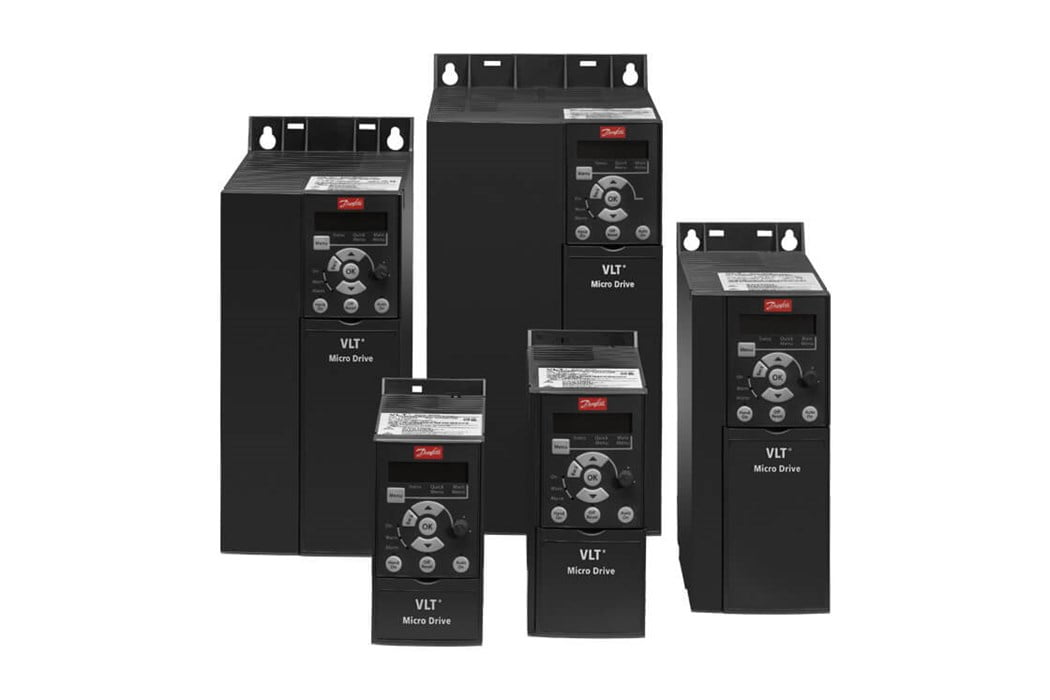
What it gives you: the capacitor disappears from the system; soft start (direct-on-line a motor draws 6–8 times its rated current, with a VFD ≈ 1–1.5 times — the breaker no longer trips); speed control and energy savings on fans and pumps (80% speed ≈ 50% consumption); built-in protection (overload, phase loss, overheating); reversing and automation. More on this — Variable frequency drive: protection, savings and control.
Where the limits are: power ≤ 2.2 kW (3–4 kW in some series); the motor must be 230/400 Δ/Y, connected in Δ; the current drawn from the supply is ≈ 2 times higher than on a three-phase supply — size the breaker and cable accordingly; a VFD cannot be fitted to an existing single-phase (capacitor) motor — the motor must be replaced with a three-phase one.
6. Five mistakes that kill a motor early
- A 400/690 Δ/Y motor in Y on 380V — a third of the torque, overheating.
- A single-phase motor on a heavy start (compressor, pump under pressure) — the capacitor and winding burn out within months.
- A motor in Y on a 220V VFD — the motor “sees” ~130V instead of 230V, there is no torque.
- Selecting the VFD by kW instead of amps — a drive is selected by the motor’s rated current; for a heavy start — one size up.
- An old, rewound motor on a VFD — the old winding insulation may not withstand the drive’s voltage pulses. On a new IE3 motor inverter-grade insulation is standard — motor selection rules.
Frequently asked questions
Can I run a three-phase motor on 220V without a VFD?
With a “capacitor circuit” — technically yes, but the motor gives ~50–60% of its power, starts weakly and the winding is loaded unevenly. The right way is a VFD with single-phase input.
Which motor suits a 220V VFD?
A three-phase motor with a 230/400 V Δ/Y (or 220/380) nameplate, connected in Δ in the terminal box, up to 2.2 kW. A 400/690 Δ/Y motor will not work.
How much does a VFD save?
On fans and centrifugal pumps, where speed can be reduced — 20–50%; on constant-torque loads (conveyor, machine tool) the savings are small, but soft start and protection remain.
Can you select and install the motor and the VFD together?
Yes — IESCO is an authorized Danfoss partner in Georgia: we select the motor (Volt Motor, IE3) and the drive, program it and commission it on site.
Conclusion
You have 380V — a three-phase motor, always. You only have 220V and the task is up to 2.2 kW — a three-phase motor + a VFD with single-phase input is much better than a single-phase capacitor motor. In both cases the first step is the same — read the nameplate: Δ/Y and the voltages.
If you are not sure which motor and drive suit your supply and your machine — send us a photo of the nameplate and tell us what it drives: ☎ +995 577 11 20 02, [email protected]. Volt Motor electric motors → · Danfoss frequency drives →


